
Butler County Previous Residents by Era
A past-address question requires an era-specific trail. The Butler County Auditor and Recorder start the recent property sequence, but they do not provide a household roster. Historical directories can name a listed householder for one edition, while the census adds family context through its public release period. Maps and newspapers help test whether an old address or building matches the parcel. The table separates those functions so an owner label, a tax-mail field, and a directory listing are not treated as the same kind of evidence.
| Source | Years It Covers | Where Held | What It Shows |
|---|---|---|---|
| Recorder online documents | 1987–present online; index timeline begins 1800 | Recorder Cloud Search | Recorded transfer and instrument trail; verify image availability |
| Recorder historical indexes | Before 1987 | Recorder office books and counter | Geographical and grantor/grantee bridges to older deeds |
| Hamilton and Middletown directories | Hamilton 1858–59 to 1989–90; Middletown 1891–2000, both with gaps | Lane and MidPointe collections | Listed names, addresses, and some street-guide evidence by edition |
| Federal census | Public individual schedules through 1950 | National Archives and library research access | Household and family context |
| Atlases, Sanborn maps, newspapers | Edition and title dependent | MidPointe, Ohio History Connection, Lane, and other repositories | Street, building, move, death, and estate context |
Begin with the current parcel details if the goal is title history. Begin with a dated directory or census if the question is about a household. For material beyond the online image route, the Recorder counter, historical books, public-library desks, and Records Center are real access channels rather than last resorts.
Butler County Previous Residents Start With a PIN
For a house trail, open the Butler County Auditor property search first and preserve the PIN, current owner label, situs, legal description, and transfer clues. The Auditor can search by owner, street number and street, or parcel number. Its owner search accepts LASTNAME FIRSTNAME, permits part of a name, and supports an asterisk wildcard. The address screen has Number and Street fields, while parcel ID can be full or partial.
Do not treat the owner mailing field as the home address. It can be a post-office box, agent, fiduciary, out-of-state address, or another tax-mail destination. The property profile also provides value, land, sketches, maps, permits, tax summary, and transfer routing clues. Those fields help identify the parcel that should be followed, but they do not establish which people lived in the building.
Note: A legal description and PIN can survive an older street spelling, rural route, apartment notation, or changed municipal label better than a street name alone.
Butler County Previous Residents After 1987
The Recorder states that documents recorded from 1987 to the present are online, while Cloud Search presents an index timeline beginning January 1, 1800. Those statements describe different things. A historical index hit does not automatically mean the same document image is online. For the oldest segment of a trail, use the Recorder’s geographical and alphabetical grantor/grantee indexes, historical books, plats, plat-conversion book, land-record book, and schedule of inlots. Ask the Recorder about counter inspection or assisted copies when the web image route stops.
The distinction is useful, not a dead end. An earlier book or index reference can carry the legal description and parties needed to continue the chain. Keep a log with the party names, document type, recorded date, document or book-and-page reference, and matching legal description. A certificate, sheriff deed, estate distribution, land contract, or transfer-on-death instrument should remain labeled by its actual type instead of being assumed to be a sale.
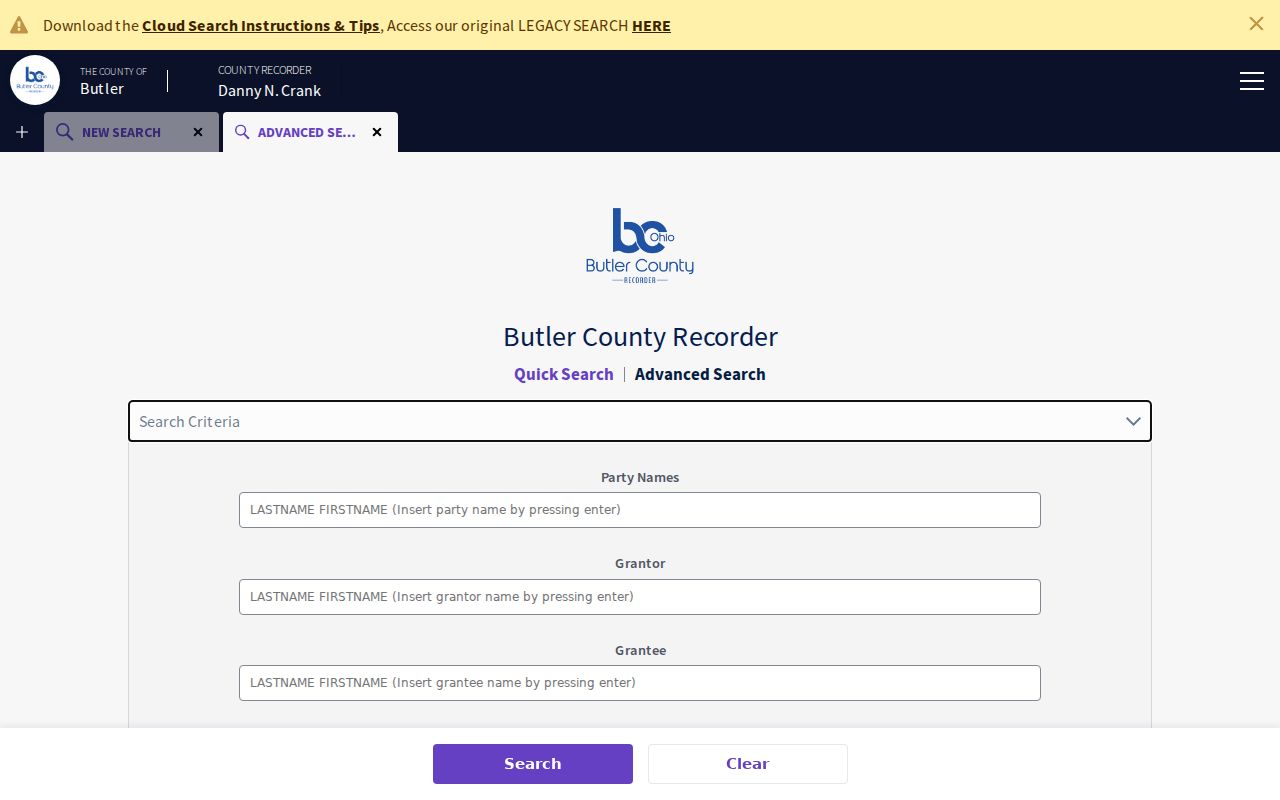
The Recorder’s Cloud Search Advanced Search is the online starting point for the recorded-document segment.
Trace Butler County Previous Residents Through Deeds
A deed chain follows ownership backward, not every person who lived at the address. Start with the parcel’s current owner, legal description, and transfer date. In Recorder Cloud Search Advanced Search, look for that owner as a grantee, select a deed-related document type, and choose a reasonable recorded-date range. Compare the return’s grantor and grantee, recorded date, instrument number or book and page, and legal description. When all of those align, the grantor is usually the prior owner or seller to investigate as the next grantee search.
- Write down the current PIN, situs, legal description, owner label, and transfer facts from the Auditor profile.
- Search the current owner as grantee in Cloud Search, using a deed-related type and a focused date range.
- Confirm that the grantor, legal description, and recorded date match the parcel before adding the instrument to the log.
- Search that grantor as grantee to find the earlier acquisition, then repeat the same comparison.
- When the online image path reaches its limit, take the party and book information to the Recorder’s historical indexes and counter route.
- Grantor and grantee
- The grantor transfers an interest. The grantee receives that interest in the recorded document.
- Chain of title
- The documented sequence of transfers connected by the same parcel or legal description.
- Legal description
- The lot, block, subdivision, township, condominium, or metes-and-bounds description that ties an older instrument to the parcel when a street address is absent.
Butler County Recorded-Document Alerts
The Recorder’s current Property Alert offers a separate monitoring function. A user can create a name, nickname, keyword, or found-document alert that runs daily against newly filed county instruments. It is not a retrospective roster and it is not a guarantee against fraud. For an heir, family member, or owner who wants notice of a new filing associated with a known document trail, the alert can be a practical supplement after the document references have been confirmed.
Keep an alert separate from the historic trail. The Auditor’s conveyance work, Recorder’s filing date, and a directory’s publication date may describe different points in time. A notice should prompt a check of the actual recorded instrument or an office inquiry, not an assumption about ownership or occupancy.
Butler County Previous Residents in Directories and Census
Ownership is only one layer of an address history. To identify past residents, use a city or reverse directory only when the selected edition has the relevant arrangement, then pair it with the closest census schedule. The 1949 Middletown volume is a verified example because it contains a “Directory of Householders, including Street and Avenue Guide.” The wider Middletown collection has documented gaps, and other volumes need inspection before an address-to-householder search is claimed. The collections and their shelf details are available through the Butler County City Directory.
- Choose a small date window around the address, legal description, or confirmed transfer.
- Read the closest reverse or street guide where that edition actually contains one, and save the edition and page.
- Check the alphabetical section for name variants, spouse notation, business or home location, and abbreviations.
- Compare the directory date with the closest decennial census, keeping the household trail distinct from the title chain.
- Test a move, death, or estate clue with a newspaper, obituary, probate matter, or recorded document from the right period.
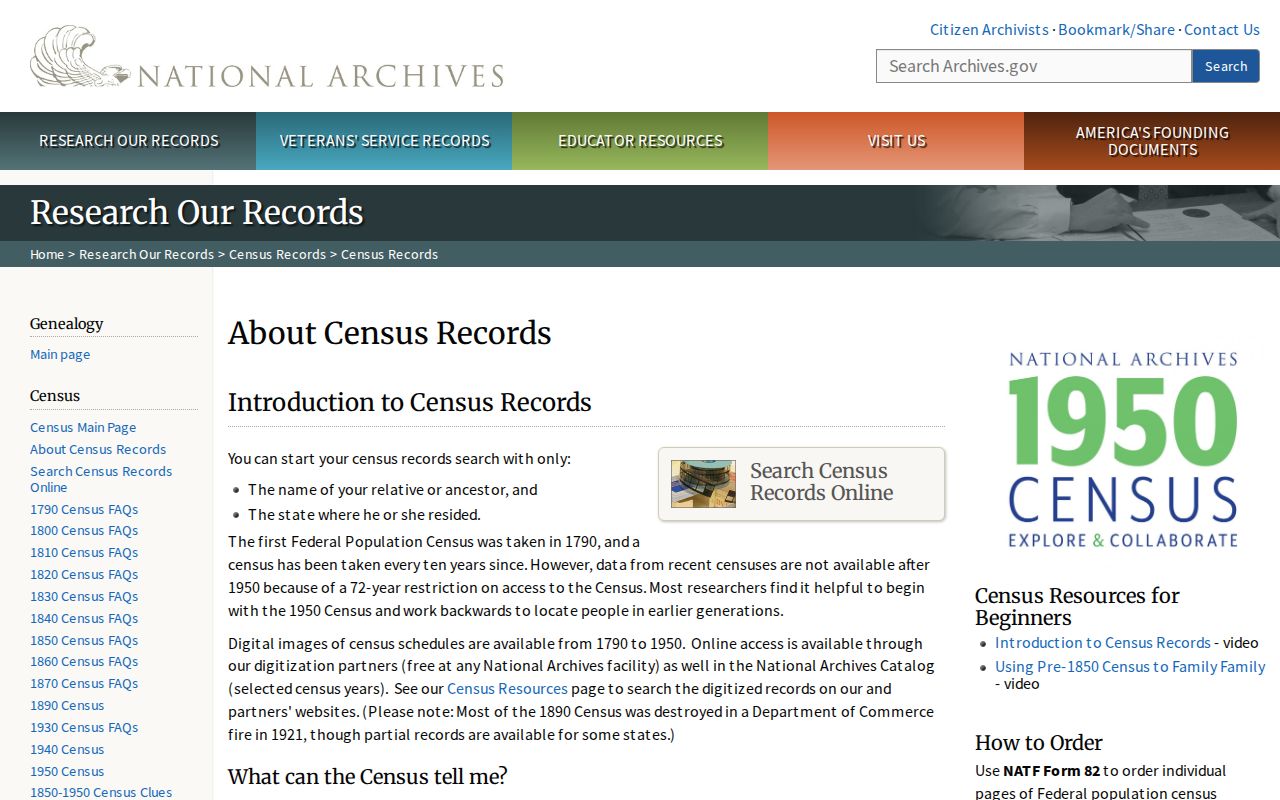
Federal census individual schedules are public through 1950. From 1850–1950 they list all people, unlike the 1790–1840 head-of-household schedules. The 1890 population schedules were largely lost nationwide after a 1921 Commerce Department fire. That is a national gap, not evidence that Butler County had a local records loss.
The National Archives census research overview explains the historical census record route used to compare past Butler County households.
Butler County Previous Residents Through Maps
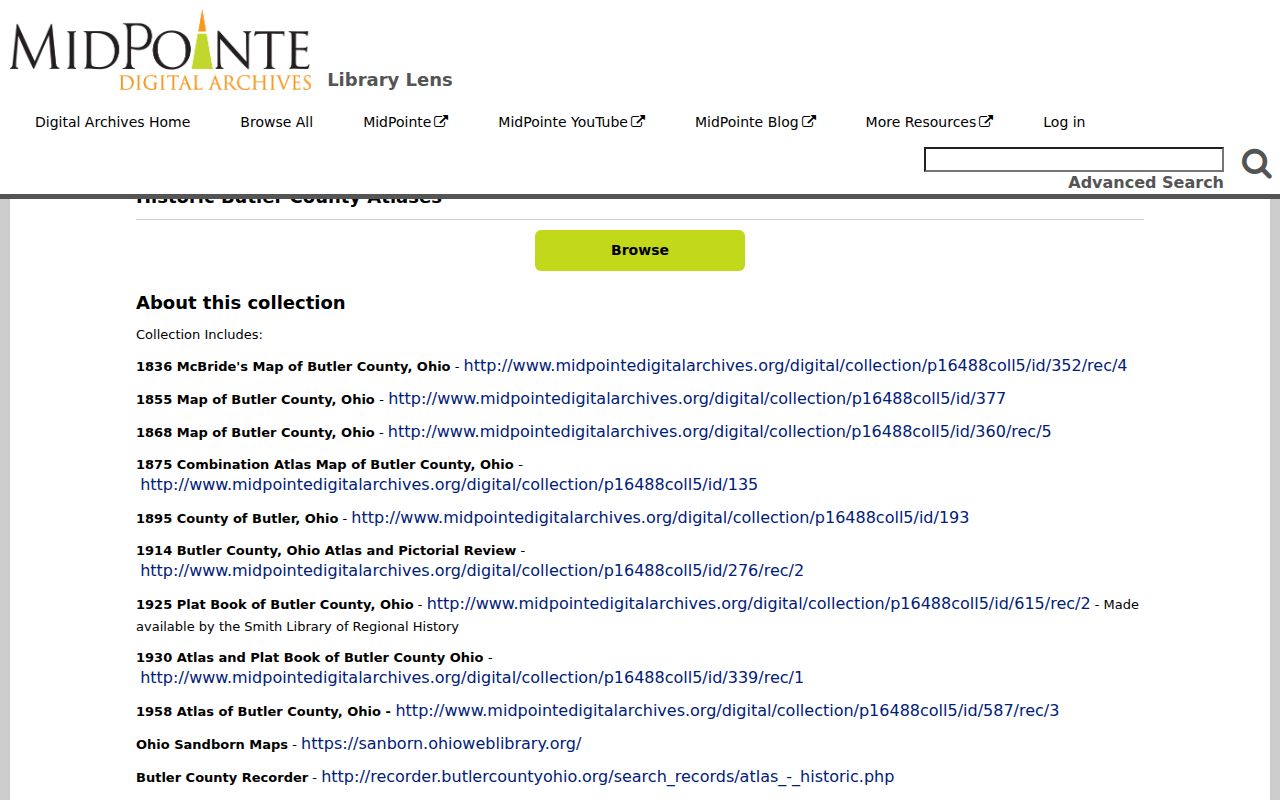
When an old address does not match its current wording, maps and atlases provide the bridge. The MidPointe Historic Butler County Atlas Collection has digital county resources for 1875, 1895, 1914, 1925, 1930, and 1958. Ohio History Connection identifies Butler County atlas editions for 1875 and 1895. Hamilton Sanborn examples include 1899 and 1927–1950; Middletown has identified 1885, 1890, 1895, 1901, 1907, and 1924 material, and Oxford has a 1925–1945 series.
Use the closest map to compare roads, lot context, subdivision patterns, and building footprint. Pair it with the legal description, a directory page, or a Recorder index reference. A historic map does not certify title or household occupancy. It is context for testing continuity when the street form alone fails.
The Historic Butler County Atlas Collection supplies local map and atlas context for an older address.
Note: No countywide street-renumbering chronology was verified, so a legal description, plat, map, and geographic index are safer than guessing a renumbering year.
Butler County Previous Residents in Local Newspapers
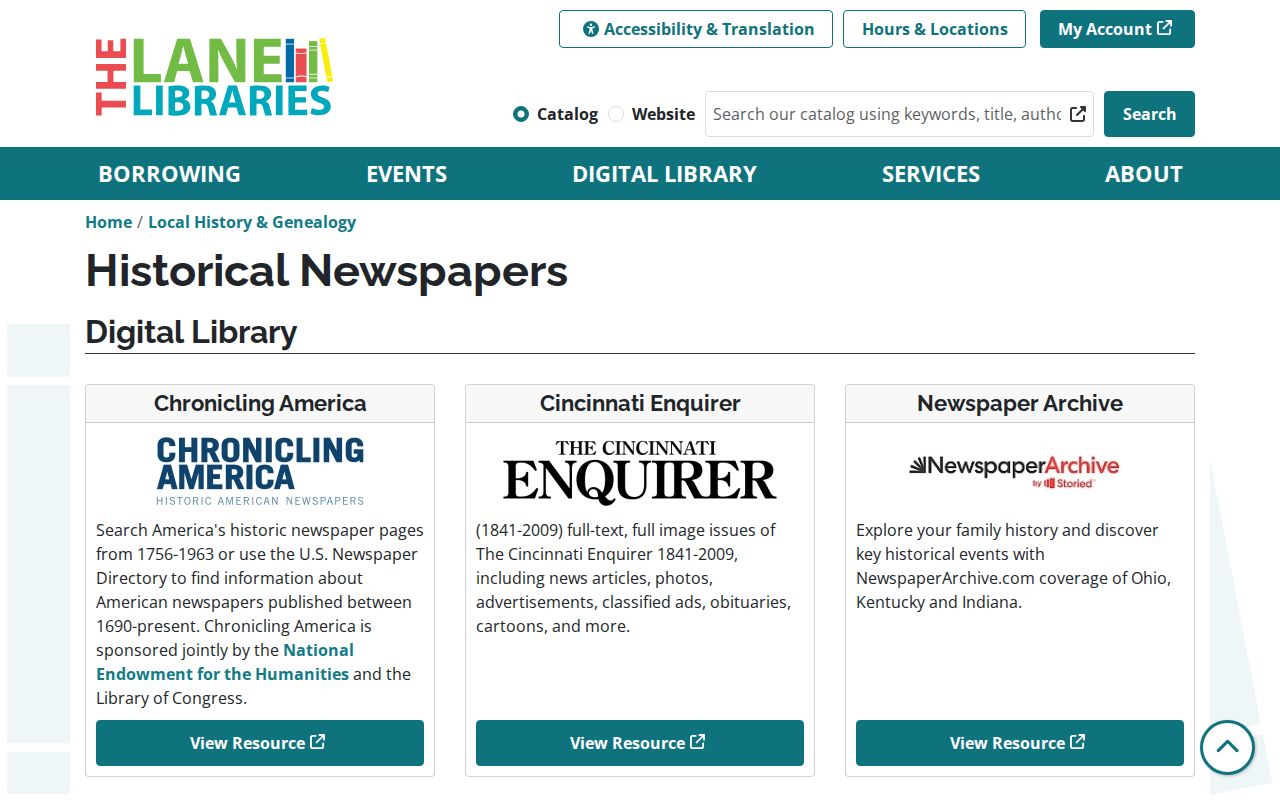
Newspapers and probate material can close a gap between a directory date and a deed date. Lane’s Historical Newspapers guide distinguishes its sources by title and format. It lists Hamilton newspapers in print, microfilm, and digital spans; Oxford’s Oxford Citizen and Miami Student; and Middletown’s Middletown Journal and Middletown Signal. When full text is not stated, ask the library for microfilm or obituary help rather than assuming an online name index exists.
For a dated estate question, the Butler County Probate Court CaseLook is an additional court route, with the court counter as a fallback. A notice or obituary can suggest a move, death, or estate event, but it must be corroborated with the document, page, date, and correct custodian. Court material can also be limited or restricted.
Lane’s Historical Newspapers guide identifies the local print, microfilm, and digital routes for past Butler County residents.
Butler County Previous Residents and Privacy
Public access has boundaries. A property record may identify an owner or tax-mail destination, but it does not list unrecorded occupants, relatives, utility users, or every person at the address. Ohio’s Safe at Home program protects qualifying participants through a substitute-address process, and protected voter records are removed from public voter databases. A missing or redacted address is a boundary to respect, not a prompt to combine older fragments from other sources.
Lawful use. Butler County previous-resident research fits family history, estate questions, property history, and civic curiosity. Do not use records to track, threaten, harass, or harm a living person; Ohio law addresses menacing by stalking in ORC 2903.211.
Confirm a document with the Recorder, Auditor, library, court, or Records Center that holds it. The Probate Court’s history records a 1912 tower fire and a 1913 flood, but it does not state that deeds, probate files, or court records were destroyed. Treat that history as courthouse context, not a Butler County records-loss claim.